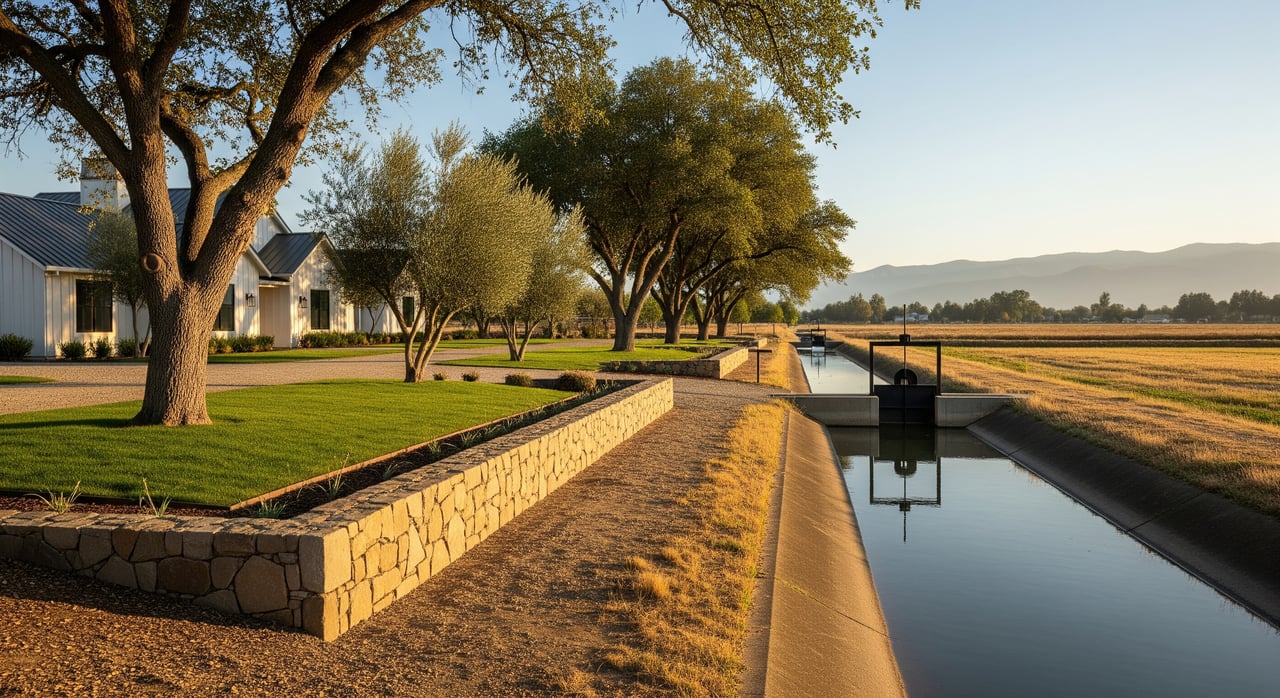
See a canal or ditch along your back fence and wonder what that means for daily life or future projects? In and around Gridley, irrigation easements are common and they can shape how you use, improve, and maintain your property. You deserve clear, local guidance so you can plan with confidence. In this guide, you’ll learn what an irrigation easement is, how it works here, and the smart steps to take before you buy or build. Let’s dive in.
What an irrigation easement means in Gridley
An irrigation easement is a recorded right that lets a water provider use part of a property for canals, pipelines, headgates, and access. The exact rules come from the recorded document and how the easement has been used over time. For a plain‑English overview of how easements work, review this helpful explainer on easement law and scope from a water law resource.
Around Gridley, most deliveries trace back to the State Water Project’s Oroville–Thermalito system, which routes water through the Thermalito complex and into local canals. The Biggs‑West Gridley Water District is a primary local operator, and it participates with neighboring agencies through the Joint Water Districts Board. When one of these districts holds an easement on a property, it typically keeps rights to access and maintain its facilities.
Districts also operate under California law and their own rules. The California Water Code allows districts to adopt rules for their systems, and courts have upheld district enforcement when landowners place obstructions in an easement. A notable appellate case, Inzana v. Turlock Irrigation District, confirms that districts can enforce reasonable rules tied to operations.
- Read more: Oroville–Thermalito facilities overview
- Local operators: Biggs‑West Gridley Water District and the Joint Water Districts Board
- Legal framework: Water Code section 22257 and the Inzana appellate decision
How easements affect daily life and projects
Use and landscaping limits
Most districts restrict permanent structures, deep‑rooted trees, fences, or new utilities within the easement area without written approval. These limits protect access for maintenance and prevent damage to canals and pipelines. Districts often reserve the right to remove unapproved obstructions at the owner’s expense. See the Turlock Irrigation District’s public guidance for a common example of these rules.
- Example policies: Irrigation easement guidelines
Access and maintenance activity
Expect crews to access the easement for seasonal work like ditch cleaning, gate repairs, or emergency fixes. That can mean equipment noise, short‑term traffic, or temporary staging. Coordination is normal, but the district’s recorded rights usually allow entry for operations.
Seepage and drainage realities
Rice irrigation, canals, and laterals can raise groundwater or create seasonal saturation near facilities. A leak or break can cause localized flooding until crews respond. Knowing where the easement runs helps you plan grading, drainage, and planting to reduce risk.
Mosquito season basics
Rice fields and managed wetlands support mosquito breeding in summer. The Butte County Mosquito & Vector Control District offers larvicide treatments, fogging schedules, and free mosquitofish for private ponds. If you notice persistent standing water, contact them for help.
- Local resource: Butte County Mosquito & Vector Control programs
Safety and insurance checks
Open water can be a safety hazard for children and pets. Plan approved fencing outside the easement and use clear signage where allowed. Ask your insurance agent about liability coverage for open water and confirm any lender or title requirements tied to the easement.
Water delivery and rule compliance
For agricultural users, noncompliance can affect water delivery. California law supports district rules, and courts have recognized the power to condition delivery when an owner obstructs access or causes waste. If you farm, treat encroachments and crossings as high‑priority items.
Due diligence steps before you buy
Gather the right documents
Start with the preliminary title report and request all recorded easements, rights of way, and related maps. If you do not have the recorders’ copies yet, you can order them using the document numbers shown on title. The Butte County parcel search is a good first step to confirm the parcel and APN.
- Records access: Butte County parcel search
- Recorded documents: How to obtain deeds and easements
Walk the site with fresh eyes
Look for canal banks, headgates, access roads, markers, or areas that are seasonally wet. Note any fences or structures that line up with mapped easements. If boundaries are unclear, consider a survey that locates recorded easements and visible improvements.
Talk to the right districts
Call the local district listed on the easement or serving the area. Ask for easement maps, maintenance schedules, encroachment or crossing permits, and any planned projects. The Biggs‑West Gridley Water District and the Joint Water Districts Board are common starting points near Gridley.
Plan ahead for projects
Before adding a fence, shed, driveway, or buried line near a canal or pipeline, request written approval from the district. Some projects require engineered plans, bonds, or inspections. If you are subdividing or doing major grading, expect to show easements on your maps and coordinate early.
Options if an easement impacts your plans
Sometimes you can request an encroachment permit or a designed crossing that meets district standards. You can also negotiate seller credits or require approvals before closing. Full relocation or vacation of an active irrigation easement is uncommon and usually requires board approval and compensation. For context on easement scope and options, see this overview of easement law and practice.
- Background reading: How easements are created and enforced
Local contacts to keep handy
- Biggs‑West Gridley Water District: start with district rules, easement maps, and permits. Visit BWGWD
- Joint Water Districts Board: coordination point for shared facilities. Visit Joint Water Districts
- Butte County parcel and records: confirm APN, then obtain recorded easement documents. Parcel search and recorded document access
- Mosquito & Vector Control: schedules, service requests, and mosquitofish pickups. Local programs
If you are weighing a home or land purchase near Gridley and want a clear plan for easements, permits, and resale value, we are here to help. Reach out to Connect Real Estate Group for local guidance and hands‑on support from offer to close.
FAQs
What is an irrigation easement on a Gridley property?
- It is a recorded right that lets a water provider use part of your land for canals, pipelines, and access, with the scope defined by the document and district rules supported by California law.
Can a district remove trees or fences inside the easement?
- If district rules and the recorded easement prohibit obstructions, the district can require removal and may remove them to maintain facilities, as upheld in the Inzana appellate decision.
Will an irrigation easement stop my building plans?
- Not always, but you often need written district approval for structures, fences, or crossings; unapproved work can be denied or removed, so coordinate early.
How do I find out if a Gridley parcel has an easement?
- Review the preliminary title report, order the recorded easement documents from the county, and use the Butte County parcel search to confirm parcel details and mapping.
Who should I call about a canal behind my property?
- Start with Biggs‑West Gridley Water District or the Joint Water Districts Board to identify the facility, request maps, and learn about encroachment permits and maintenance schedules.