Pull up Durham's home prices on three different trackers in the same afternoon and you'll come away with three different towns. One shows the median sale price falling by more than half in six months. Another shows a "typical" home costing well over the reach of most first-time buyers. A third shows sales ranging from the low $200,000s to well past a million dollars, inside the same zip code, in the same year.
None of these numbers are wrong. They're each describing a slice of a town that doesn't have one housing market. It has at least five, stapled together under a single zip code, and the median you see on a portal is an average of things that were never meant to be averaged.
Why the median swings so hard
Durham doesn't sell many homes in a given year. Zip code 95938 saw roughly 31 total home sales over a recent trailing twelve months, and that thin volume means every single closing has outsized power over the town's reported median. One tracked snapshot showed Durham's median sale price at $435,000 in October of 2025. Six months later, the same tracker's April 2026 read had it down to $224,884, a headline drop of more than 56 percent year over year.
That's not a crash. It's arithmetic. When a town closes two or three homes in a given month, whichever two or three happened to sell decide the median for that stretch. A month that closes an in-town starter home and a small country lot looks nothing like a month that closes an orchard estate, even though both months are technically the same market. Recently sold prices tracked across the zip code have ranged from roughly $217,500 to $940,100, and current asking prices span from around $140,578 up past $1.29 million. A single median sitting somewhere in the middle of that range describes almost nothing that's actually for sale.
If you're comparing Durham's median to a number you saw for Chico or Paradise, you're comparing an average of five different products to an average of whatever that town happens to have on the market that month. The comparison feels precise. It isn't.
Five towns wearing one zip code
The more useful question isn't "what's the median in Durham." It's "which Durham are you shopping in." Based on what's actually traded recently, the town breaks into bands that barely touch each other.
| What you're buying | Typical price band | What sets it apart |
|---|---|---|
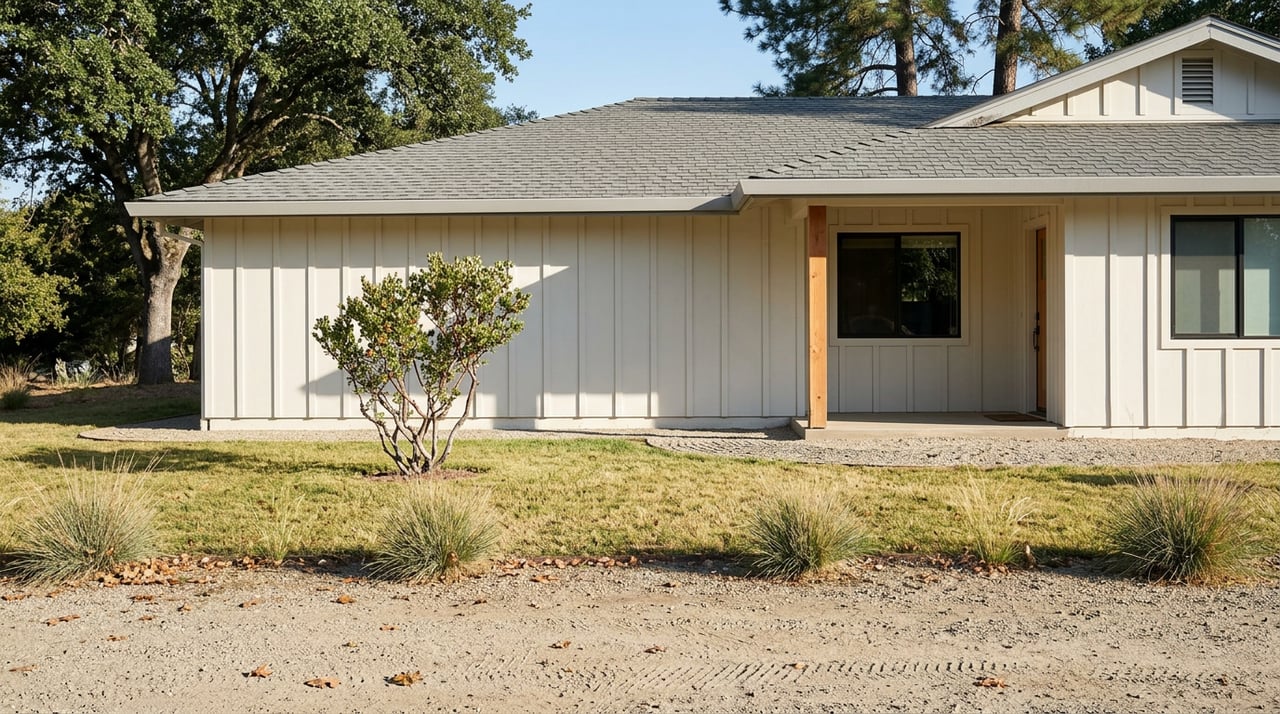
| In-town home on a standard lot | roughly $300,000 to $475,000 | Sidewalks, small yards, walkable to Durham Community Park and the school |
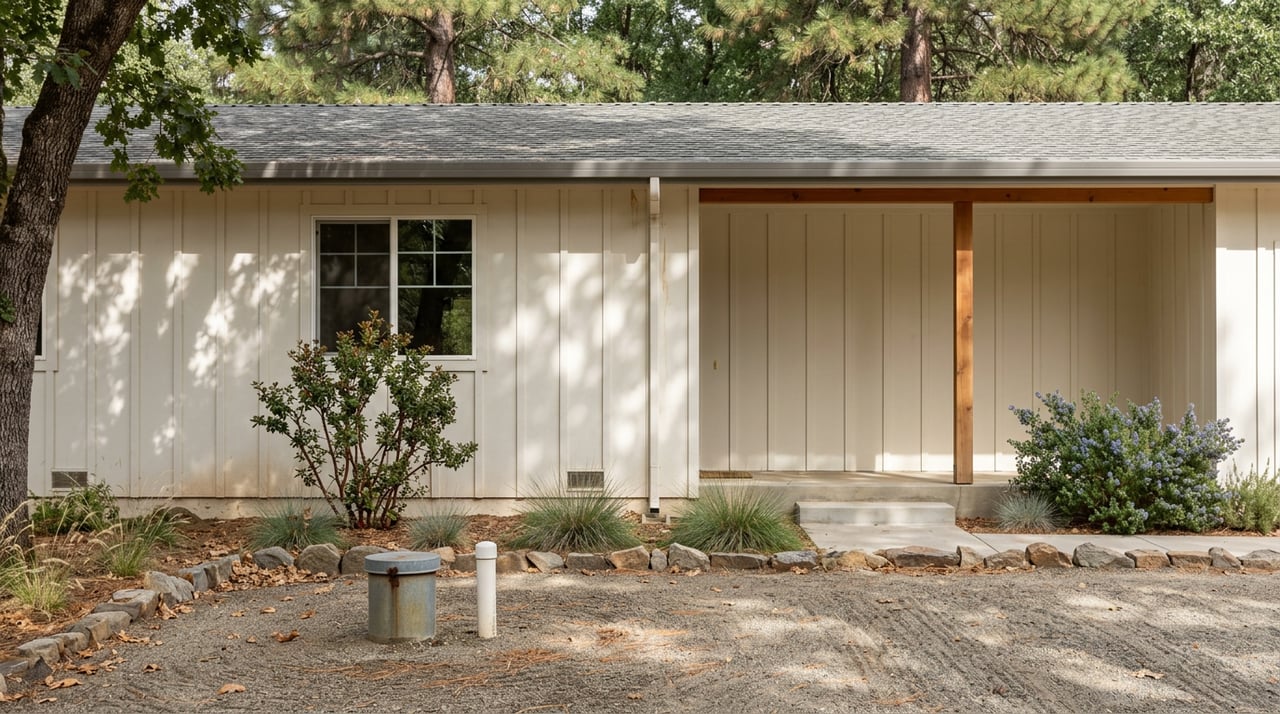
| Midcentury ranch on 1 to 5 acres | $400,000 to $700,000 | Country setting, room for animals, zoned under Butte County's Very Low Density Residential rules |
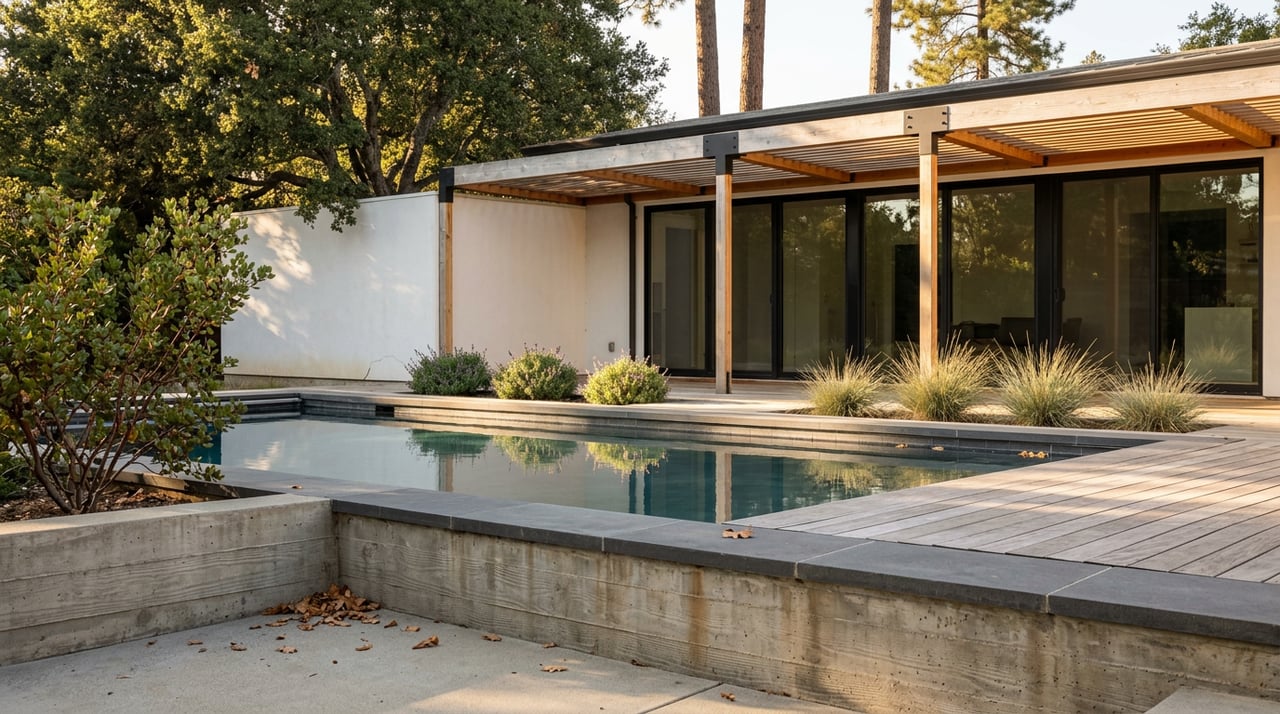
| Gated home in Fairway Oaks | $1,000,000 to $1,500,000 | Golf course frontage, HOA-governed, newer construction |
| Condo near the country club | $450,000 to $500,000 | Same amenities as the gated homes, none of the acreage |
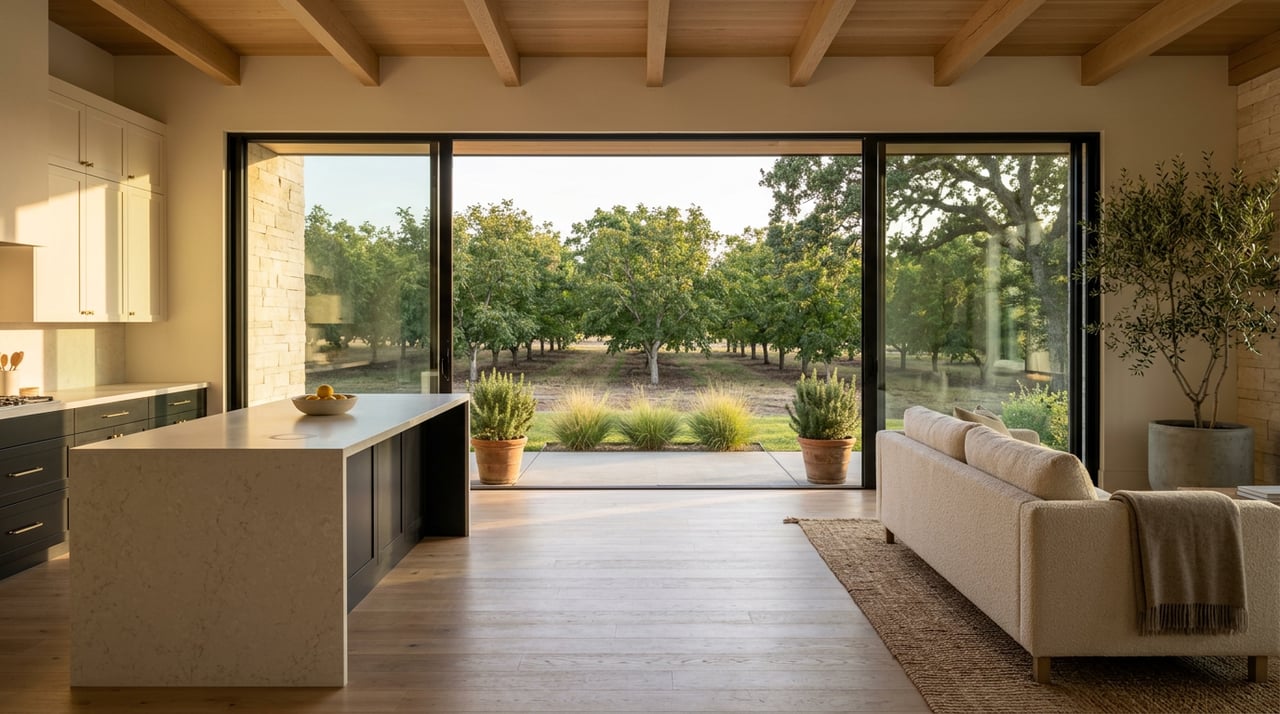
| Working orchard estate, 1990s to 2000s build | $1,300,000 to $2,700,000 | Multi-acre parcel, producing trees, zoned Agriculture |
| Raw buildable land | $105,000 for about an acre up to $725,000 for 25 acres | Price scales almost entirely with acreage and zoning, not location |
The in-town homes and the orchard estates aren't competing for the same buyer, and they shouldn't be measured against each other by one blended number. A recent in-town listing sat on roughly 7,840 square feet with an owner-occupant in mind. A few miles out, a working ranch on Durham Dayton Highway sells because it has three connected wells, mature trees, and a Blue Diamond delivery contract, not because it's convenient to the elementary school.
The golf course tier adds its own wrinkle. Fairway Oaks and the country-club condos sit against Butte Creek Country Club, an 18-hole parkland course with five teeing areas, on-site dining, and a Kids Club whose motto is built around membership feeling like family. Some of that community's addresses carry a Chico mailing address even though the neighborhood sits right against Durham's edge, which is one more reason a clean "Durham versus Chico" price comparison rarely holds up. You may be comparing two names for the same stretch of ground.
The acreage and orchard tier draws a different kind of buyer, often someone weighing horse property or a hobby farm. Kristin Cooper, who runs Durham Park Stable, put it simply when describing why people end up out here:
"It's a great launching point for all the horse-riding opportunities around here."
That launching point includes the public riding arena at Durham Community Park, the Midway Bike Path that runs past orchards into Chico, and the Butte Creek Canyon Ecological Reserve a short drive north, 287 acres of creekside habitat where wintering bald eagles and beavers share the water with hikers and anglers. None of that shows up in a median price, but it's a large part of why the acreage band commands what it does. The Historic Patrick Ranch Museum, a 28-acre working farm bequeathed to the Far West Heritage Association in 2001, anchors the calendar for the whole area, with an Autumn Fest, a spring California Nut Festival, and a summer Country Faire and Tractor Show. As museum director Yvette Zuniga described the fall event, "Every fall, we have our Autumn Fest with a pumpkin patch and pony rides."
The zoning line underneath all of it
The thing that actually separates these bands isn't finish quality or curb appeal. It's Butte County zoning, and it draws a hard line most buyers never think to ask about until they're trying to do something with the land later.
Land zoned Very Low Density Residential carries a one-acre minimum parcel size. That's the zoning under most of the midcentury ranch band, the one-to-five-acre country lots that sit closest to town. Because the minimum is only an acre, a five-acre VLDR parcel can, in principle, be divided into smaller pieces down the road, which is part of why land in this band holds value even when the house on it is dated.
Land zoned Agriculture works differently. The minimum parcel size there runs from 20 acres up to 160 acres depending on the specific designation, and the county allows exactly one single-family home plus one accessory dwelling unit per legally established parcel. Housing for agricultural employees is permitted as an accessory use, but anything more intensive, a second residence, a processing operation, additional structures beyond the ag use, requires a conditional use permit. An orchard estate priced at $1.8 million isn't just buying a bigger house. It's buying a parcel that can't be casually split, can't add a second dwelling without going through the county, and comes with real limits on what a future owner can build.
This is the detail that gets missed when a buyer compares Durham's median to a number from another Butte County town. The median doesn't tell you whether you're looking at a parcel that can be divided later or one that legally can't. It doesn't tell you whether the acreage you're paying for is flexible or frozen in place by a zoning designation set decades ago. Those questions matter more than the headline price, especially for anyone thinking about land as a long-term hold rather than just a home.
What this means if you're comparing towns
If you're cross-shopping Durham against Chico or Paradise using median price alone, you're not comparing towns. You're comparing whatever handful of closings happened to land in each town's sample that month. A more useful comparison starts with the band, not the average: are you looking at an in-town lot, a VLDR ranch parcel, a gated golf-course property, or AG-zoned acreage. Each of those has its own price range, its own zoning rules, and its own answer to the question of what you can do with the property five or ten years from now.
Durham rewards buyers who ask the second question instead of stopping at the first number they see. If you're trying to figure out which of these five markets actually fits what you're trying to do, whether that's a starter home near the park or a working parcel with room to grow, Connect Real Estate Group knows this ground band by band, not just by the median. Let's Chat.