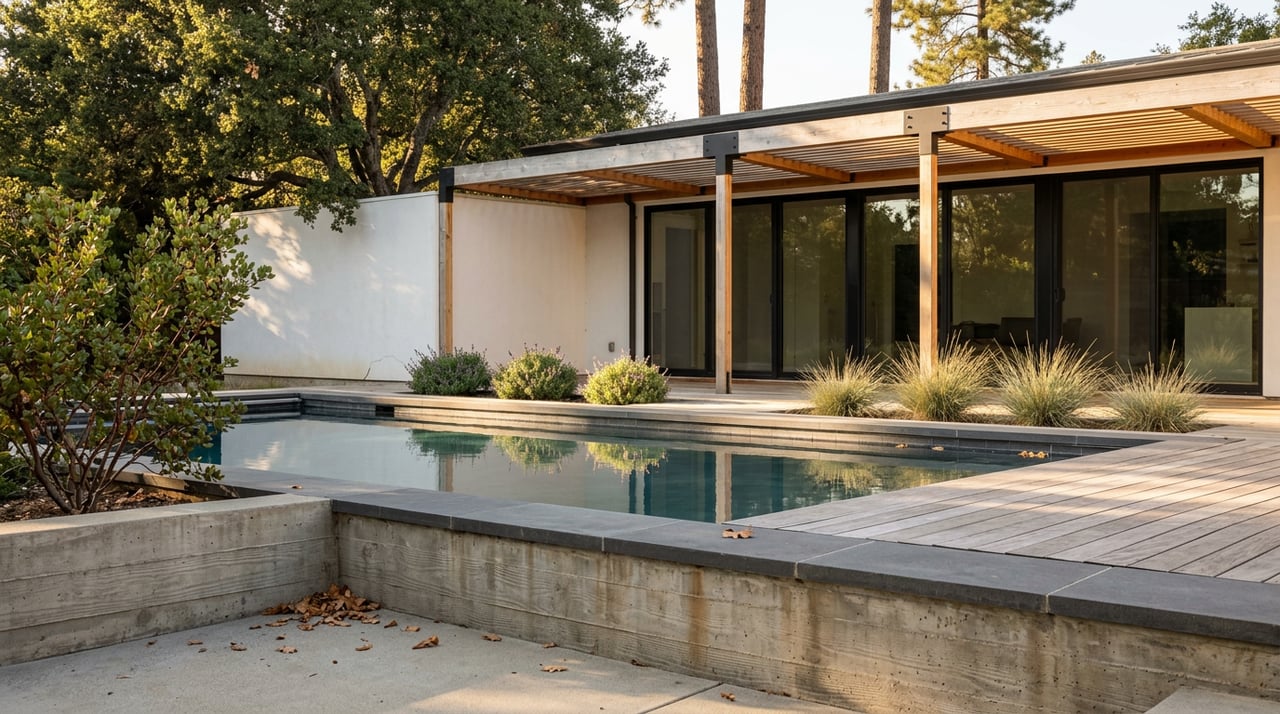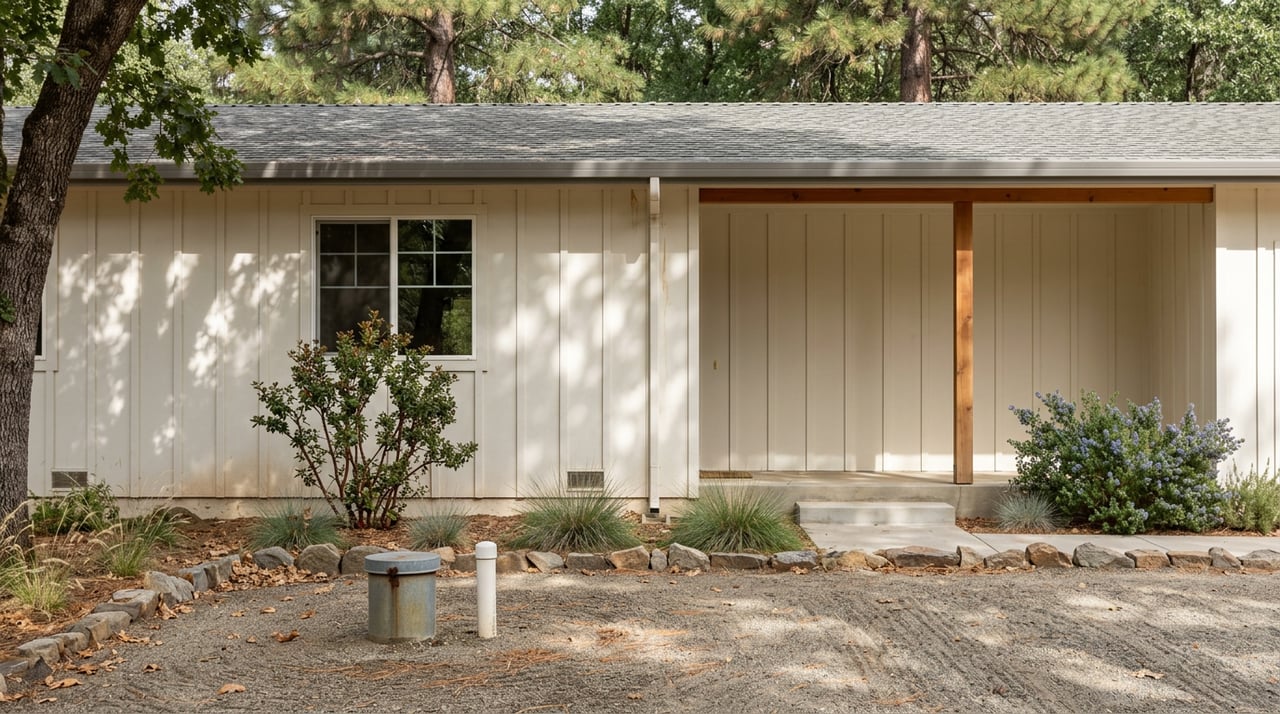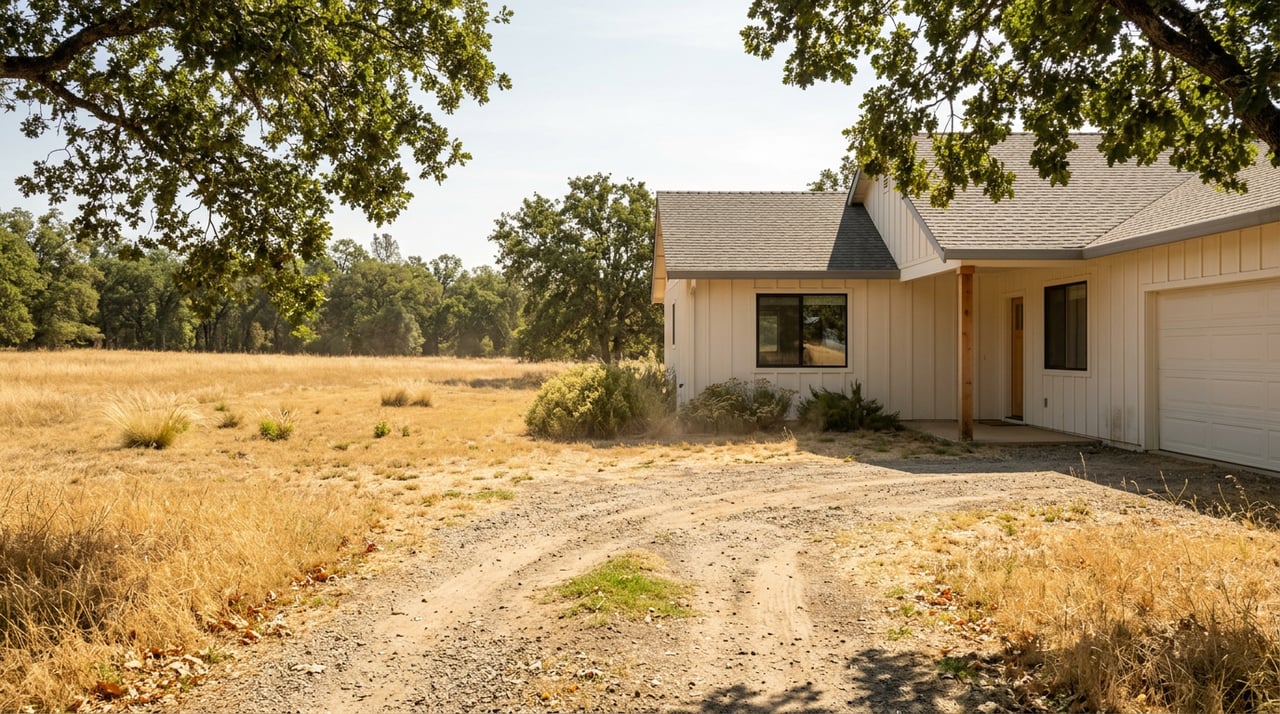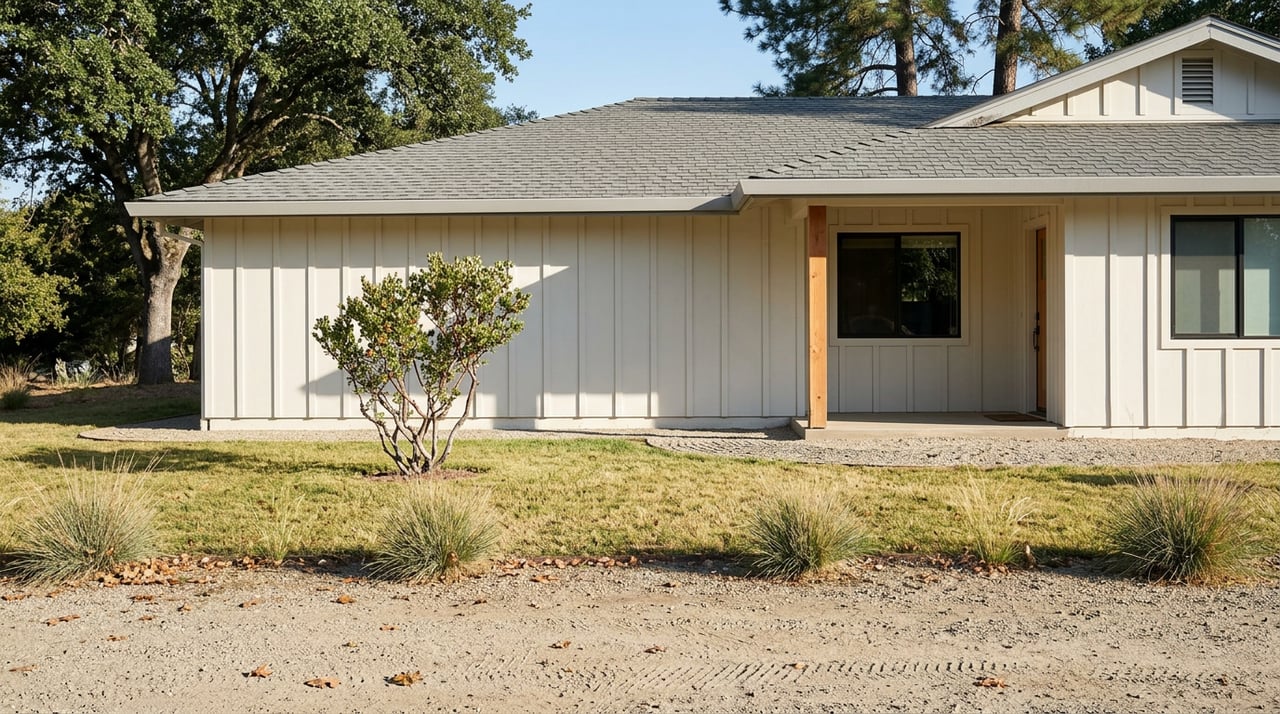
Jen Goodlin runs the Rebuild Paradise Foundation, the nonprofit that has spent years helping Camp Fire survivors get back into their homes. Her own house was built to the highest fire safety standards available. Right around the five year anniversary of the fire, her annual premium went from $2,500 to $12,000. If the person running the town's fire recovery effort can see a number like that, a buyer touring a rebuilt three bedroom on Pentz Road needs to understand that a finished, code compliant home in Paradise does not come with a predictable insurance bill attached. It comes with a set of questions, and the answers depend on paperwork most buyers never think to ask for.
That paperwork is the real subject of this post. Two rebuilt homes that look identical from the curb can sit in completely different places on the insurability spectrum, and the difference has almost nothing to do with square footage or finishes.
The Line Nobody Draws On A Listing Sheet
After the Camp Fire destroyed most of the town in November 2018, Paradise did something no other municipality in the country had done: the Town Council voted unanimously to require every new home built after July 14, 2022 to meet the Insurance Institute for Business and Home Safety's Wildfire Prepared Home standard. Then-Town Manager Kevin Phillips and Mayor Steve Crowder framed it as a chance to rebuild smarter rather than just faster.
That date matters more than most people realize when they are comparing listings. A home permitted in 2021 was never legally required to meet the standard. A home permitted in 2023 was. Both can look like new construction. Both can have the same builder, the same floor plan, the same granite counters. Only one was built under an enforceable mandate for ember resistant vents, a Class A roof, and a five foot noncombustible zone around the foundation. The other may or may not have voluntarily pursued the same protections, and there is no way to know that from a walk through.
What The Standard Actually Checks
The Wildfire Prepared Home designation is not a marketing label. It requires a third party inspection tied to a specific set of requirements, verified through the program at wildfireprepared.org. The core of it is what IBHS calls the Home Ignition Zone, the five feet immediately surrounding the structure:
- Ground cover in that zone must be noncombustible, with gravel or paving stone recommended over mulch or bark
- No vegetation of any kind, including overhanging tree limbs, is allowed to exist within or over that zone
- No firewood, trash cans, or other combustible items can be stored there
- No boats, RVs, or vehicles can be parked within it
On top of the ignition zone, the standard also requires specific roofing, siding, and vent materials designed to stop embers from entering the structure. This is the layer that survived the Camp Fire at a much higher rate than older construction. Homes built after 1997, when California first tightened fire codes, survived at nearly four times the rate of homes built before that year, according to research cited in a 2026 study from the California Department of Insurance and the National Association of Insurance Commissioners.
The Designation Expires, Which Most Buyers Don't Expect
Here is the detail that catches people off guard during a transaction. A Wildfire Prepared Home designation is valid for three years. Maintaining it requires an annual landscape review to confirm the ignition zone is still clear. At the end of the three year window, the home needs a full re-designation to prove continued compliance.
That means a home that earned its designation in 2022, right when the ordinance took effect, is now several renewal cycles into its life. If the annual reviews were skipped, or if the three year re-designation lapsed, a buyer could be looking at a home that was built to the standard on paper but is not currently carrying an active, verifiable designation. Insurers underwriting the policy will care about that distinction. A seller who can produce current documentation is offering something real. A seller who can only point to the original 2022 paperwork is offering less than it looks like.
Two Homeowners, Two Very Different Outcomes
The designation clearly moves the needle on whether a carrier will write a policy at all. Gary Ledbetter's home was the first in Paradise to earn the higher Wildfire Prepared Home Plus designation, and when Mercury Insurance's leadership toured it, they reportedly called it a straightforward yes and wrote him a policy on the spot, according to reporting from the San Francisco Chronicle.
Casey Taylor's experience shows the limit of what the designation can do. Her home also met the Wildfire Prepared Home standard, complete with ember resistant vents and a five foot concrete perimeter she built herself. She was still quoted around $8,000 a year for fire insurance, according to ABC7's reporting on the rebuild.
The takeaway is not that the standard doesn't work. It measurably reduces losses, and the 2026 CDI-NAIC study found that community wide adoption of the standard could cut average annual losses by roughly a third. The takeaway is that the designation changes your odds of finding coverage and improves your negotiating position with a carrier. It does not set your price. Carriers still run their own wildfire risk models on the surrounding terrain, tree cover, and road access, and Paradise's geography carries that weight regardless of what any single parcel has done.
The FAIR Plan Timeline That Changes The Math This Fall
For homes still sitting on the California FAIR Plan, the state's insurer of last resort, the calendar adds real urgency to all of this. The FAIR Plan initially requested a rate increase near 36 percent in 2025. The California Department of Insurance approved a statewide average increase of 29.1 percent, effective October 15, 2026.
The FAIR Plan also launched a wildfire hardening discount program for policies dated November 15, 2025 or later, letting policyholders who document all twelve qualifying mitigation measures save up to 16.4 percent off the wildfire portion of their premium. That discount can soften the October increase for a hardened home. It does not cancel it, and it only applies to homes that have actually documented the work.
For a buyer evaluating a Paradise home right now, this means the question of whether a property is likely to land with an admitted carrier like Mercury or Capital Insurance Group, which committed to writing more Paradise policies in November 2025, or whether it is likely to stay on the FAIR Plan through this rate increase, is not an abstract long term concern. It is a cost that starts accruing on a specific date less than two months from now.
| Pre-July 2022 permit | Post-July 2022 permit | |
|---|---|---|
| WPH standard required by ordinance | No | Yes |
| Designation status | Voluntary, must be verified separately | Should be built-in, still needs active verification |
| Typical insurer posture | More likely to default to FAIR Plan absent proof of hardening | Better positioned for admitted market carriers |
What To Ask Before You Write An Offer
Before making an offer on a rebuilt Paradise home, it is worth asking the listing agent for specifics rather than assuming a new looking house checks every box:
- What is the building permit issue date, and does it fall before or after July 14, 2022
- Was a Wildfire Prepared Home designation ever obtained, and when was the most recent annual landscape review or three year re-designation
- Is the current policy through an admitted carrier or the FAIR Plan, and can the seller share the premium
- Did the seller use any Rebuild Paradise Foundation defensible space assistance, which can be a sign of documented mitigation work
None of this shows up in photos, and very little of it shows up in a standard disclosure packet. It is the kind of thing worth confirming while there is still time to factor it into the offer.
A Few Questions We Hear Often
Do I inherit the seller's insurance policy when I buy a rebuilt home in Paradise? No. Insurance does not transfer with the sale. You will need to get your own quote, but the seller's documented WPH status and renewal history gives an underwriter real evidence to work with rather than starting from scratch.
Can an older, pre-2022 rebuilt home still get the designation? Yes. The program is voluntary for homes outside the mandate, and owners can apply through wildfireprepared.org, though the home has to actually meet the Home Ignition Zone and construction requirements first.
Does having the designation guarantee a lower premium? No. It improves the odds of getting written by an admitted carrier and can qualify a FAIR Plan policy for a hardening discount, but as Casey Taylor's experience shows, a designated home can still carry a high premium depending on how the carrier models the surrounding area.
If you are looking at property on the Ridge and want help sorting out which homes come with real, current fire hardening documentation and which just look the part, our team knows this rebuild inside and out. Connect Real Estate Group has walked Paradise buyers through exactly this kind of due diligence since day one of the recovery. Let's Chat before you write that offer.