Buying land in Paradise can look simple at first glance. You find a parcel you like, picture the home or investment you want, and start doing the math. But in Paradise, land value is tied closely to what you can actually do with the site, so a smart purchase starts with due diligence on utilities, access, fire requirements, and permitting. If you understand those pieces early, you can move forward with a lot more confidence. Let’s dive in.
Why Paradise land needs extra homework
Paradise has a different development profile than many nearby communities. The Town says Paradise is the largest unsewered city in California, which means most residential parcels rely on onsite wastewater systems instead of public sewer.
That one fact changes a lot about how you should evaluate a lot. Instead of assuming the basics will be easy to sort out later, you should treat septic, water, road access, zoning, and defensible space as part of your decision before you remove contingencies.
The Town also requires development to align with the General Plan, CEQA, and local zoning regulations. For you as a buyer, that means the question is not just whether a parcel is attractive or affordable, but whether it can move efficiently toward permit-ready status.
Start with water service
In Paradise, Paradise Irrigation District, or PID, is the local water provider. Before you write an offer, it helps to find out whether the parcel already has water service, whether there is an active meter, or whether you may need to order a new meter.
PID asks sellers to disclose water account status to buyers, and buyers can request water status during escrow. That can give you a clearer picture of where the parcel stands and help you avoid surprises after closing.
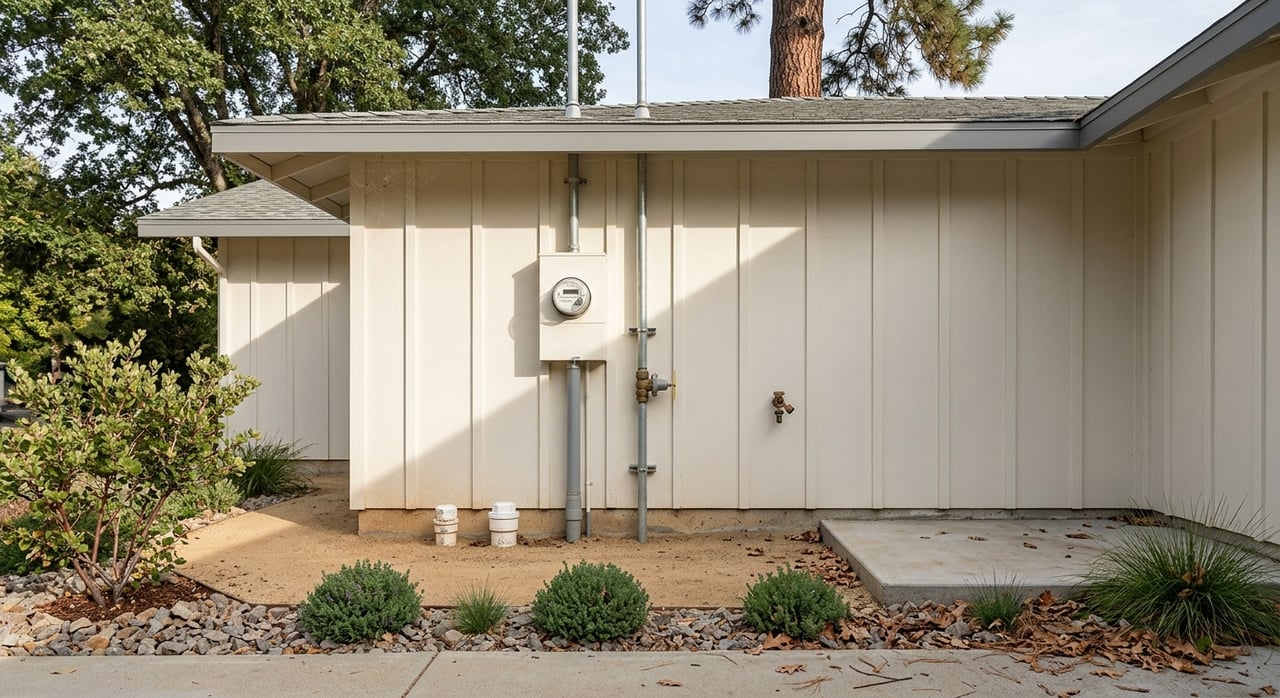
If a lot has never had water service, PID says you should contact customer service for a new meter order. PID also requires backflow prevention devices as a condition of water service, so your cost and timing may involve more than simply turning water on.
For buyers planning to build, fire flow matters too. PID lists a residential fire-flow test among its service requests, and Paradise requires a hydrant flow test for new residences, with possible added fire-flow requirements if sprinkler systems are involved.
Water questions to ask early
- Does the parcel already have a PID meter?
- Is the water account active, inactive, or never established?
- Will you need a new meter order?
- Will backflow requirements affect your setup or budget?
- Do you need a fire-flow test to understand build feasibility?
Septic is a major part of land value
Because most Paradise parcels depend on onsite wastewater, septic review is one of the most important parts of buying land here. You want to know whether the property already has a usable septic system, whether a new system will be needed, and whether site conditions could require an alternative design.
According to the Town, standard residential systems generally use a 1,500-gallon tank and dispersal field. But restrictive soils or groundwater conditions can trigger test holes and additional review for alternative systems.
That matters because septic is not just a box to check. It can affect timeline, design, construction cost, and even whether the lot works for your goals.
The Town says septic permit review usually takes about 2 to 4 weeks. If you are buying land for a future custom build, it is wise to factor that into your planning instead of assuming permits will move instantly after closing.
Existing systems and title transfer
If the parcel has an existing onsite system, Paradise requires a Clearance to Record for title transfer. The septic evaluation used for that clearance must be performed within 12 months of closing escrow.
The Town says title-transfer septic clearances are generally processed within five business days after a complete application is received. That is relatively quick, but it still adds a procedural step you should understand before closing.
Fire clearance is not optional
Paradise is in a defined very high fire hazard severity zone, and that has real implications for land buyers. Defensible-space compliance is required for every parcel transfer, including vacant lots.
That surprises some buyers, especially if they assume fire review only applies when there is a house on the property. In Paradise, even vacant land may need fuel reduction or cleanup before a transfer can move smoothly.
For parcels with standing homes, both fire clearance and septic clearance are required. The Town says fire inspections are generally completed within five business days after the application is received.
If you are comparing multiple parcels, current defensible-space condition can affect both timing and cost. A lot that looks similar on paper may require more work before closing than another parcel nearby.
Check access before you fall in love
A beautiful parcel can become frustrating fast if access is unclear. Before making an offer, confirm whether the lot has legal road access, whether the road is publicly maintained, and whether future driveway or utility work will cross public right-of-way.
Paradise’s planning checklist asks applicants to show road access, road type or improvement standard, easements of record, wells, septic locations, drainage, slopes, and flood-related constraints. That gives you a good sense of how closely access and site layout connect in the permit process.
The Town also keeps a list of publicly maintained roads. That can help you understand whether a parcel fronts a public road or whether access may involve private-road considerations that deserve a closer look.
When permits may be needed for access work
If your driveway, culvert, grading, or utility trench work touches public street or right-of-way, an encroachment permit may be required. In Paradise, that can apply to work in Town right-of-way.
If the work touches County right-of-way instead, Butte County says an encroachment permit is required for work in County right-of-way, including driveway approaches. The County also notes that this can be a gating item before final building approval.
That is why access is not just about whether you can physically get onto the parcel today. It is also about whether your future improvements can be approved without major delay.
Zoning and setbacks shape the buildable area
Not every lot gives you the same usable building envelope, even when acreage appears similar. Paradise says setbacks depend on the zoning district and on any additional setbacks recorded on a parcel map or subdivision map.
In plain terms, the dimensions on a listing do not automatically tell you how much of the site is realistically buildable. You should confirm zoning and recorded restrictions before you budget around a home design, shop plan, garage placement, or other improvements.
Site conditions matter too. Paradise says grading permits require site plans and erosion and sediment control plans, and site plans may need to show drainage ways, slopes, and Special Permit Zones or Flood Zones.
For sloped or irregular parcels, these details can influence both cost and layout. A lot may still work well, but it helps to know that before you commit.
Understand the permit path and timeline
In Paradise, the path from land purchase to construction can involve several moving parts. A straightforward custom home may still require planning review, wastewater review, grading or encroachment work, fire-flow review, and building-plan review.
Paradise Planning says the Town’s administrative permit process is usually about 2 to 3 weeks once the application is complete. If CEQA review is required, the process can take longer.
The Town also uses GovWell for many applications and inspections. For buyers and builders, that can make it easier to start organizing the permit path early, even before closing, if you want a smoother transition.
A practical way to think about timing is this:
- Title-transfer clearances may take days
- Septic review may take weeks
- Utility buildouts may take months
That last point is especially important with power and gas.
Plan ahead for electric and gas
PG&E handles electric and gas service requests in Paradise. If you are dealing with existing service, some start or stop requests may be handled quickly.
But new residential service is a different story. PG&E’s statewide average data show total project times of 355 calendar days for a single-family electric service project and 449 calendar days for a single-family gas service project.
Those are averages, not guarantees, and every property is different. Still, they are a useful reminder that utility coordination can last much longer than escrow and may affect when you can realistically begin or complete a build.
For land buyers, this means a “ready to build” assumption should always be tested. A parcel may be desirable and workable, but you should go in with a realistic timeline.
A smart pre-offer checklist for Paradise land
Before you remove contingencies, try to answer these core questions:
- Is the parcel tied to PID water service, and does it already have a meter?
- Will a new meter or backflow setup be required?
- Is there an existing septic system, and if so, is it usable for your plans?
- If no septic exists, are soils or groundwater likely to require alternative design review?
- Does the parcel currently meet defensible-space requirements?
- Could fuel reduction be needed before closing?
- Does the lot have legal road access?
- Is the frontage on a publicly maintained road?
- Will driveway, culvert, or utility work require a Town or County encroachment permit?
- What is the zoning district?
- Do recorded setbacks or parcel-map restrictions reduce the buildable area?
- Do slopes, drainage, or flood-related constraints affect where you can build?
This kind of checklist can save you from buying a parcel based on assumptions. It also helps you compare lots more accurately when two properties look similar online but have very different readiness levels.
Why local guidance matters
Land transactions in Paradise are rarely just about price per acre. They are about understanding how utilities, access, wastewater, fire compliance, and zoning fit together on one specific parcel.
That is where local, hands-on guidance can make a real difference. When you have someone helping you ask the right questions early, you can avoid wasted time, budget more accurately, and move toward closing with a clearer plan.
Whether you are looking for a future homesite, a long-term land hold, or an investment parcel, the goal is the same. You want to know not only whether you can buy it, but whether you can use it the way you intend.
If you are thinking about buying land in Paradise, working with a local team that understands acreage, rebuilding context, and parcel-specific due diligence can help you make a smarter move. When you’re ready to talk through a lot, a timeline, or your next steps, reach out to Connect Real Estate Group.
FAQs
What utilities should you verify before buying land in Paradise?
- You should verify water service through PID, meter status, possible backflow requirements, fire-flow needs, septic status or septic feasibility, and the likely timeline for electric and gas service through PG&E.
What septic rules affect land purchases in Paradise?
- Because most residential parcels rely on onsite wastewater, you should confirm whether a usable septic system exists, whether a new system is needed, and whether soil or groundwater conditions may require alternative system review.
What fire clearance is required for vacant land in Paradise?
- Paradise requires defensible-space compliance for every parcel transfer, including vacant lots, and the Town says fire inspections are generally completed within five business days after an application is received.
What access issues should you check on a Paradise parcel?
- You should confirm legal road access, whether the road is publicly maintained, and whether future driveway, culvert, grading, or utility work will require a Town or County encroachment permit.
How long can the Paradise permit process take for a land buyer?
- Some title-transfer clearances may take days, septic review may take 2 to 4 weeks, administrative planning review is often 2 to 3 weeks once complete, and utility buildouts can take much longer, sometimes many months.
Why do zoning and setbacks matter when buying land in Paradise?
- Zoning and recorded setback requirements determine the buildable envelope, so a parcel’s listed size does not always reflect how much usable area you will have for a home and other improvements.