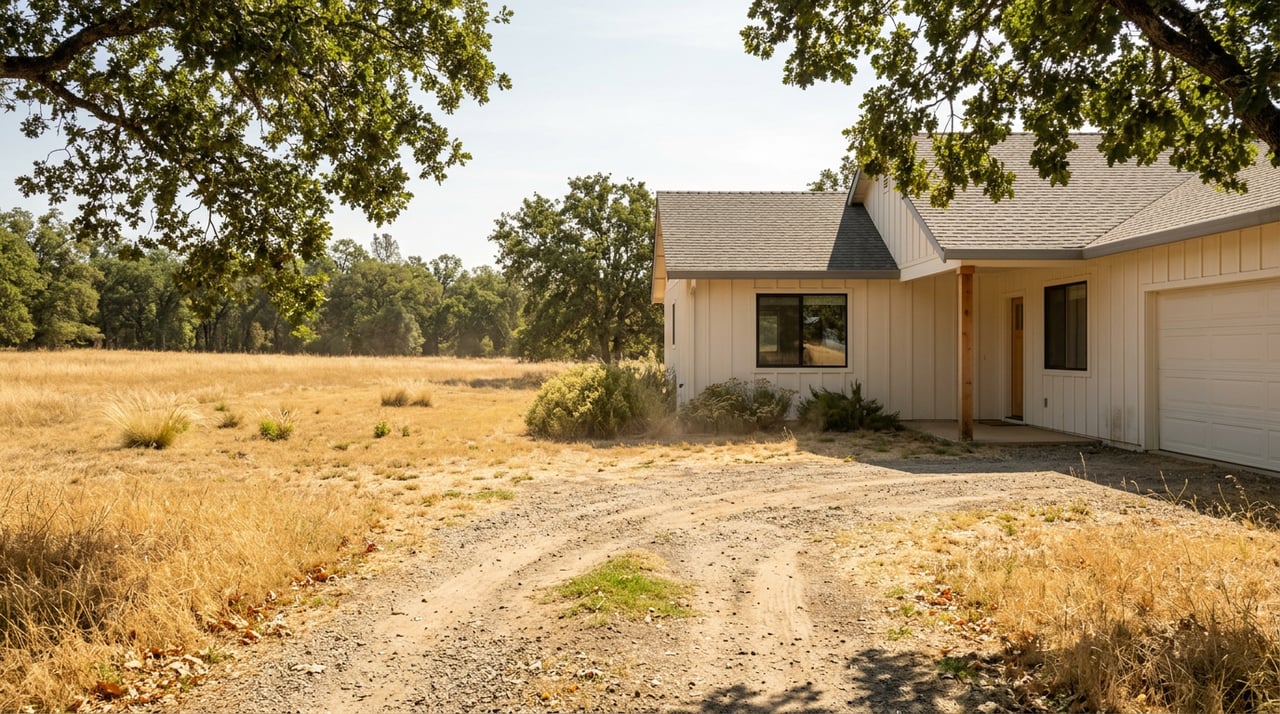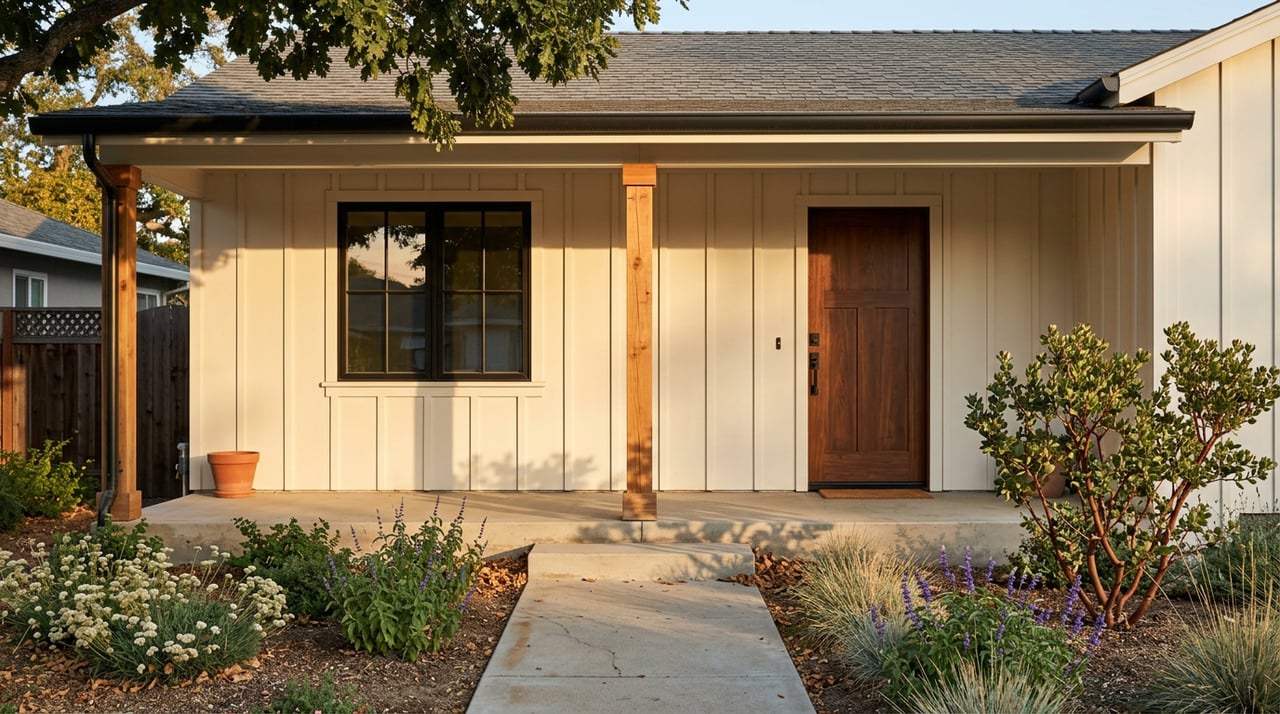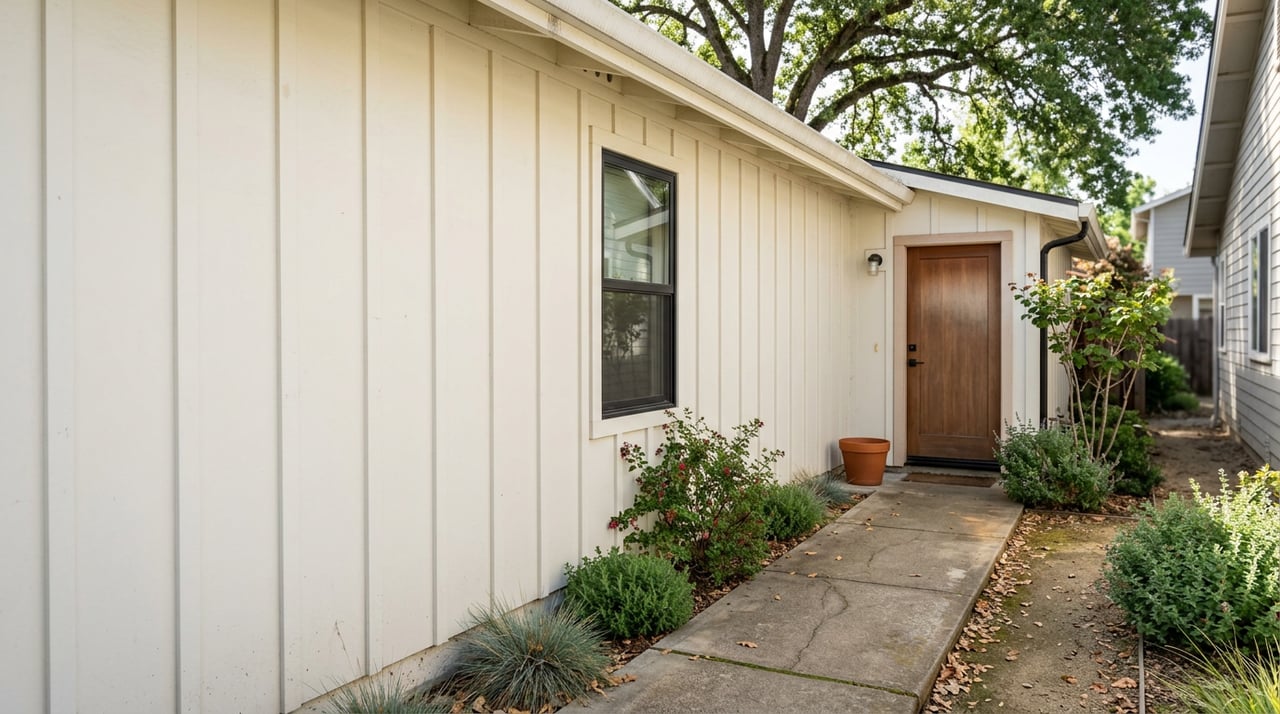
Two three-bedroom bungalows sit four blocks apart in the Avenues, Chico's tree-lined pocket of Craftsman cottages near CSU Chico and lower Bidwell Park. Same era, same lot size, same walk to campus. One home connects to city sewer. The other still runs on a septic tank that predates most of the trees on its street. The difference isn't the builder, the remodel history, or how hard either seller negotiated. It comes down to a line state regulators drew through this part of Chico in 1990, and that line still decides which homeowners pay a connection fee and which ones don't.
If you're shopping for an older home in central or south Chico, that line matters more than the listing photos will ever tell you.
The Order That Started It
The story begins with a single phone call. In 1979, a resident on Nord Avenue told the Butte County Health Department that a private well was showing unusually high nitrate levels. Follow-up testing found the same problem spreading across several Chico neighborhoods, and by 1990 the Central Valley Regional Water Quality Control Board had seen enough. The board issued Prohibition Order 90-126, naming individual septic systems as the primary source of groundwater nitrate contamination in what's now called the Chico Urban Area, and ordering those systems phased out.
The scale of that order is easy to underestimate today. It initially affected nearly 12,000 dwelling units, touching an estimated 30,000 residents across 10,000 parcels. According to the City of Chico's own account, the issue became genuinely divisive locally, with some residents doubting the health risk or suspecting the whole push was a backdoor way to force unincorporated county residents into annexation. Whatever the politics, the order stood, and Butte County, the City of Chico, and the former Chico Redevelopment Agency spent the following decades building the sewer infrastructure to comply with it.
Why It's Still Live In 2026
This isn't ancient history you can safely file away. The formal Chico Urban Area Nitrate Compliance Plan wasn't adopted until 2001, and its own environmental review described a plan to abandon roughly 3,950 septic systems over a period of 7 to 10 years, which would have put the finish line somewhere around 2008 to 2011. A groundwater monitoring report covering September and October of 2020 found that only 2,149 septic tank destructions had occurred since the program began, a little over half the target and roughly a decade past the plan's own original timeline. Six years on from that report, the conversion work is still going neighborhood by neighborhood rather than all at once.
The city is still actively managing this. Chico's current sewer services page lists a live "Am I in a Nitrate Compliance Area?" lookup tool alongside a Sewer Connection Assistance Program for low-income homeowners, offered in both English and Spanish, and points to the City's 2025 Sanitary Sewer Master Plan Update as the document now guiding future sewer capacity decisions. None of this reads like a closed chapter. It reads like a program still working through its list.
The Fee Waiver Almost Nobody Asks About
Here's the part that changes how you should think about an older Chico home: connecting a property to city sewer normally costs real money, and inside the mapped Nitrate Compliance Program boundary, a meaningful chunk of that cost disappears.
County program materials describing the fee structure list three separate charges tied to a new sewer connection:
| Fee | Standard Rate | Inside Compliance Area Boundary |
|---|---|---|
| Water Pollution Control Plant (WPCP) fee | $2,251 per unit | Waived |
| Sewer lateral fee | $29.81 per linear foot | Waived |
| Sewer main fee | $47.80 per linear foot | Waived |
Those specific dollar figures come from the county's own program summary rather than this year's fee schedule, so treat them as a snapshot of the size of the waiver, not a guaranteed quote. Rates change. What doesn't change is the mechanism: two homes with identical septic-to-sewer distances can face very different connection bills depending on which side of a boundary drawn decades ago they happen to sit on. Before you write an offer on a septic property in central or south Chico, it's worth a call to the city to confirm current rates and whether that specific parcel qualifies.
Where This Actually Applies
The compliance program isn't spread evenly across Chico. County and city materials describe three concentrated zones: the Lassen Avenue corridor in north Chico, the central area sometimes called Chico-Vecino, which overlaps heavily with the Avenues, and the Chapman-Mulberry neighborhood in south Chico. Roughly 65 percent of the original 12,000 affected dwelling units, about 7,800, are located in these Chico neighborhoods, with the remaining units in unincorporated Butte County parcels that fall within the same urban service area.
There's a nice bit of local texture buried in the county's own program notes: when construction crews built out sewer infrastructure in Chapman-Mulberry, the county specifically highlighted that all four contractors hired for that work were local companies out of Chico, Paradise, and Oroville. It's a small detail, but it says something true about how this project actually got built, one Butte County crew at a time rather than through some distant contractor.
The Closing Quirk That Catches People Off Guard
Here's where this stops being a history lesson and starts being a transaction detail. If you're converting a home from septic to sewer in Chico, the city won't even let you apply for a plumbing permit until Butte County's Declaration of Septic Tank Destruction has been filed first. That's a distinct county-level step that sits in front of the city-level permit, and it's easy to miss if you're timing a purchase or a rehab against a tight escrow calendar.
There's a second trigger worth knowing if you're eyeing a larger project on an older septic lot. Butte County's onsite wastewater ordinance requires that for any project generating more than 1,000 gallons of wastewater per day within the Chico Urban Area, septic tank permits can't be issued until the project has secured concurrence from the Regional Water Quality Control Board. That threshold covers more than you'd think, from a larger single-family rebuild to certain accessory unit additions, and it means the regional board that started this whole program in 1990 can still have a say in what happens on your parcel today.
What To Ask Before You Write An Offer
If you're looking at an older home in the Avenues, Chapman-Mulberry, or the Lassen Avenue corridor, a few questions will tell you more than the listing sheet ever will:
- Is this specific parcel inside the mapped Nitrate Compliance Program Connection Area boundary, or just in the general neighborhood?
- Is the home currently on septic or already connected to city sewer, and if septic, has a Declaration of Septic Tank Destruction ever been filed for it?
- If you're planning any addition or rebuild, would the new wastewater flow cross the 1,000 gallon per day threshold that requires Regional Board sign-off?
- What does the city's current fee schedule look like for a standard connection versus one inside the waiver boundary?
- When did sewer service actually reach this specific block? The projects rolled out over years, not all at once, so a home two streets away may have converted a decade before or after this one.
A Few Common Questions
Does a septic system automatically mean something is wrong with the home? No. Plenty of septic systems in Butte County function well for decades with normal maintenance. What's different inside Chico's compliance boundary is that the system's future isn't entirely up to the homeowner. Regulatory pressure to convert has been building in a documented, ongoing way since 1990.
If I buy a septic home in the compliance area, am I forced to convert immediately? Based on the program's own structure, conversions have rolled out project area by project area over years, not as a single mandatory deadline for every remaining household today. But certain triggers, like exceeding that 1,000 gallon per day wastewater threshold on a larger project, can force the question sooner than you'd expect.
Where do I actually check if an address is inside the boundary? The City of Chico maintains a lookup tool for exactly this question on its sewer services page, alongside the current connection assistance program details.
Older Chico homes carry a kind of history that doesn't show up in square footage or a comps report. If you're weighing a purchase in the Avenues, Chapman-Mulberry, or anywhere else this program touches, it's worth having someone in your corner who already knows which questions to ask the city before you're three weeks into escrow. That's exactly the kind of hands-on groundwork Connect Real Estate Group handles for buyers and sellers across Butte County every day. Let's Chat before you write that offer.